
It’s as family-oriented as family life can get.
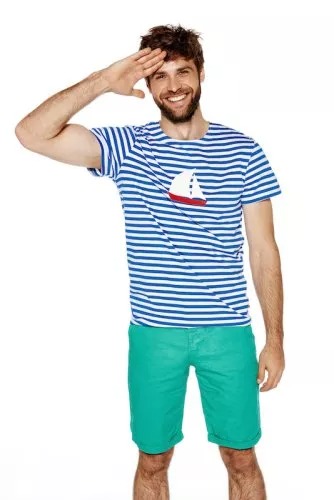
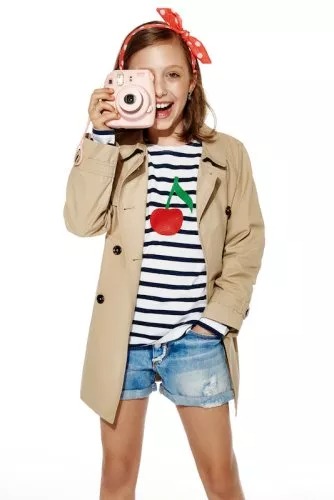
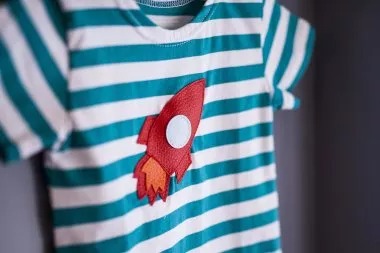
Pískacie arose as a nostalgic look back at the past. Silvia Némethová never had a shirt like this as a child. And suddenly her dream came true when she and Majo brought a brand to the market that entertains both children and adults.
I met them at their home and we talked not only about the creation and philosophy of the brand, but also about responsibility and how to run a business when you live in the same household.
Silvia Némethová studied graphic design and later photography at VŠVU, from where she moved to casting and later production, where she met Majo. Today, they form a family together with two daughters – Zara and Amelia. Along with them came Pískacie t-shirts. “Classic scenario,” Silvia laughs.
Silvia, I know Pískacie t-shirts started as a "maternity" project while you were taking care of your two girls at home. How did the idea of Pískacie t-shirts come about?
Silvia: I remembered pískacie t-shirts from my childhood as something underground and luxurious, which I really wanted. For a long time, the thought that these shirts had completely disappeared from stores haunted me. I couldn't find them anywhere, didn't have one as a child, and it would be great if they reappeared. But it was just a dream. Majo helped me bring it to life. He likes new challenges, and one day he ordered the pískatká…
Majo: Yes, we knew we wanted to try it, but we didn't know what it should squeak. So we searched. We bought children's books, cut them up, and sent them to different manufacturers saying THIS is what we want.
What were the beginnings of the business on maternity leave?
Majo: We started with tank tops, which we ordered ready-made and just sewed on the squeakers. But we quickly realized they were just more t-shirts, already everywhere on the market, without added value. It would have been cheaper and our profit could have been higher, but we enjoyed the idea of making everything in Slovakia.
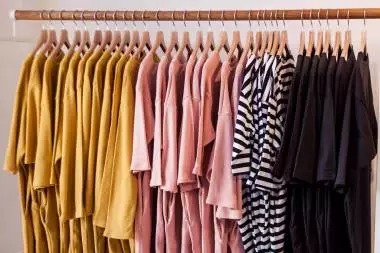
Silvia: By trial and error, we started looking for materials, cuts, I drew some sketches and then brought them to life. We wanted it to be beautiful, wearable, with cuts flattering every figure.
Did it catch on?
Silvia: We initially dressed our girls in the t-shirts for kindergarten and other children loved them. That created the first demand. Then we created a very simple website and Facebook page and waited to see what would happen. Suddenly, very many orders started coming in, and I chaotically recorded them in whatever was at hand. (laughs)
Majo: And in 2013, we participated in the first Majáles organized by Čerstvé ovocie. There, Ďuri Kemka and Robo Roth supported us, and suddenly we sold everything in one day. The next days we had nothing to sell, so we just stood there with business cards. The following year, we had a pickup point in Bratislava at Kontakt, opened by Dana Kleinert. People came, which was the first sign that it could really work.
How about your designing of the cuts? Did you have to learn to draw?
Silvia: No, I just doodle something, it's not representative at all. (laughs) Then I consult with Lenka, head of the seamstresses, and they gradually construct the cut. It's a lot about communication and trying, and once it seems right, we start making other sizes. The truth is, my Zara is a mannequin for XXS, I am S, Majo is L. Sometimes we go fully handmade. It's as family-like as it can be.
Whenever we get new fabric, I first sew a dress for the girls to see how it washes, how durable it is, how the material behaves. This way, we test it before releasing it.
What about the shapes of the appliqués hiding the squeaker?
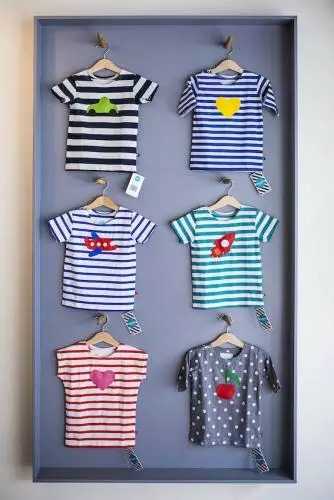
Silvia: At first, we just made a simple circle because we liked that most. But people started asking for other shapes like hearts or animals, and we learned to listen to their demand.
You mentioned materials. I know you want to be as local as possible and know where materials come from. Was ecological responsibility always a point of the brand philosophy?
Majo: We researched how others did it, but when we saw many ordered from China, we immediately rejected that. We knew we wanted a local path. We searched for someone making fabrics because we couldn’t find anyone in Slovakia. We succeeded in the Czech Republic.
Several years have passed and people still enjoy the t-shirts. What has changed or stayed the same?
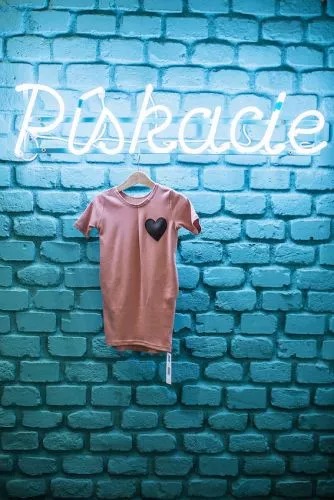
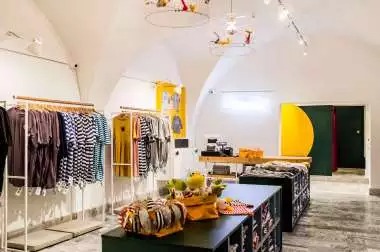
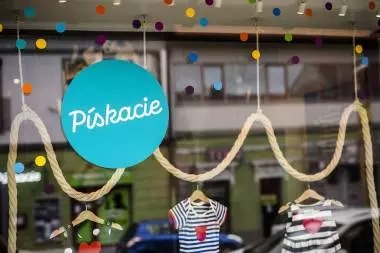
Silvia: The number of seamstresses changed. From the original two women, now 11 seamstresses in Hlohovec sew the shirts, where around 2000 textile production ended with the closing of OZETA. We opened our first store on Miletičová, which we still have. Last year, we added stores in Trnava and Košice. We would also like to open a store in Prague.
Are you in contact with your customers?
Silvia: At first, I spent time in the store while the kids were in kindergarten. Today, I know I can rely on the girls in the store, so I don’t go as much. But I still like to drop by when they need help.
Who is your customer?
Silvia: I think our typical customer is a mom. A mom buying for a child, then for herself. Big oversized dresses sell very well, maybe even more than the t-shirts. This was my goal: so that a mom with a few extra kilos could dress with us and leave satisfied.
Majo: So the target is family. But there are also people wanting t-shirts for holidays, or a manager in a suit might appear and actually buy a t-shirt for leisure.
How did you approach pricing? In Slovakia, many don’t realize the work behind it, especially if a brand aims to be responsible.
Silvia: If we wanted the profit we imagine, the t-shirt would be much more expensive, but I think it shouldn’t be. Children grow out of it quickly and not everyone can afford it.
Majo: From the start, we wanted the right balance. Costs are high, so of course we wanted higher profit for growth. But we set a limit: a child’s t-shirt shouldn’t cost more than €15. Of course, in stores, you can find t-shirts for €3–5.
We hoped it could eventually support us, not just the seamstress. At first, it mostly supported the seamstress and then the salesperson. People initially thought €15 was a lot, but gradually, with the rise of other local producers with higher prices, it became recognized that €15 is not too much. People see the story behind it and the quality is sufficient to accept the price.
Have you never increased the price?
Majo: We keep it the same, despite complex situations, like expanding production or opening stores. We look for the most efficient ways to maintain the price.
What are your and Pískacie t-shirts’ ambitions for the future? Majo, you mentioned wanting to focus more on your ecological footprint as a brand…
Majo: On the blog of our new website, I want to promote ecological responsibility more. If someone sources from China, the t-shirt travels tens of thousands of kilometers. Local production burdens nature less.
Silvia: Customers can also “customize” a t-shirt at the store if we don’t have it. That’s an ecological approach: no mass production, no storage, less unused stock becoming waste. We produce mostly on order and efficiently, which also benefits the t-shirt price.
Do you apply this responsibility in personal life as well?
Majo: We don’t overthink it, but look for balance. I understand people care more about the products and the producers, pushing for fair conditions. But globally, it’s complex. Companies should ensure work is fulfilling and legal. Personally, I see it as finding balance in production and society.
We support big brands with purchases, but balance it. We aim to make our seamstresses happy, avoid unnecessary stock, and sell what people want. The Hlohovec workshop grows, and so do we. Pískacie’s footprint is not just us two, but 22 people involved.
What does your daily routine look like? It’s Tuesday, four o’clock, and I caught you at home. How do you split work and private life?
Silvia: Since Majo is home, it’s easy-going, we split tasks smoothly. People warned us it would be stressful, but I see it as a hobby, and we want to keep improving. It became our life.
Majo: We are basically always at work, even at home. Work-life balance is just “Life” for us. We sleep thinking about what to do next. So yes, always working.
Are you happy?
Majo: Absolutely.
Silvia: Scarily so. (knocks on wood three times)
Text: Veronika Pilátová